
Area Rug Cleaning: On Your Own Floor, or Off to a Rug Plant?
Most of the rugs in a home can be cleaned right where they lie, on the same visit as the carpet. A few should not be, and knowing which is which saves you money and protects the rug. Here is how we decide, what a rug plant does that a technician on your floor cannot, and how to look after a rug in between.
- Most synthetic rugs and many wool rugs are cleaned on your own floor during the carpet visit, with the same low-moisture process, and are dry in about an hour.
- Silk, viscose, antiques, rugs with dyes that run, and rugs a pet has soaked more than once belong at a rug plant, where the whole rug is washed through.
- A rug in a busy room does well with a yearly clean, and every six months with kids or pets in the house.
- Keep the vacuum's brush off the fringe, and never trim a loose fringe thread.
- A rug pad belongs under almost every rug. Swap one that has soaked up a pet accident.
Two ways to clean a rug, and why the difference matters
An in-home rug clean is the one most people picture. The technician cleans the rug on your floor, during the same visit as the carpet, with the low-moisture process we use on carpet. A measured amount of solution breaks the soil loose down at the bottom of the pile, cleaning pads absorb that soil and lift it out, and the pads get changed as the rug gives up its dirt. The rug never leaves the room.
A plant wash is a different job. At a rug plant the rug is dusted to shake out the dry grit, washed through from the front and the back with a great deal of water, rinsed, and then dried flat or hung in a controlled room. It takes a week or two, and the rug has to leave your home to get it.
Neither one is better in every case. The right choice depends on the fiber, the dyes, the construction and what has happened to the rug. The in-home clean handles the everyday soil, spots and traffic marks on the great majority of rugs. The plant wash is for a rug that needs to be soaked and rinsed through, or one too delicate for anything else.
Rugs that do well on your own floor
Synthetic rugs are the easy call. Nylon, polypropylene, polyester and the blends sold under a hundred brand names hold their color, shrug off moisture and respond well to a low-moisture clean. They are also the rugs most often found lying on carpet, which makes cleaning them on the spot the natural choice.
Many wool rugs clean well at home too. Wool is a sturdy fiber that hides soil and releases it willingly once the right solution reaches it. The technician checks two things first: that the dyes stay put when a damp white cloth is pressed on a hidden corner, and that the backing is sound. If both pass, the rug is cleaned where it lies.
Flatweaves, cotton rag rugs and most machine-made rugs in a traditional pattern fall in the same group. Pet spots and odors on any of these get the same protein and enzyme treatment we use on carpet, and the 100% pet odor removal guarantee that comes with it.
The rug dries in about an hour in most cases. A thick wool pile can take a little longer, and the technician will tell you when the furniture can go back.
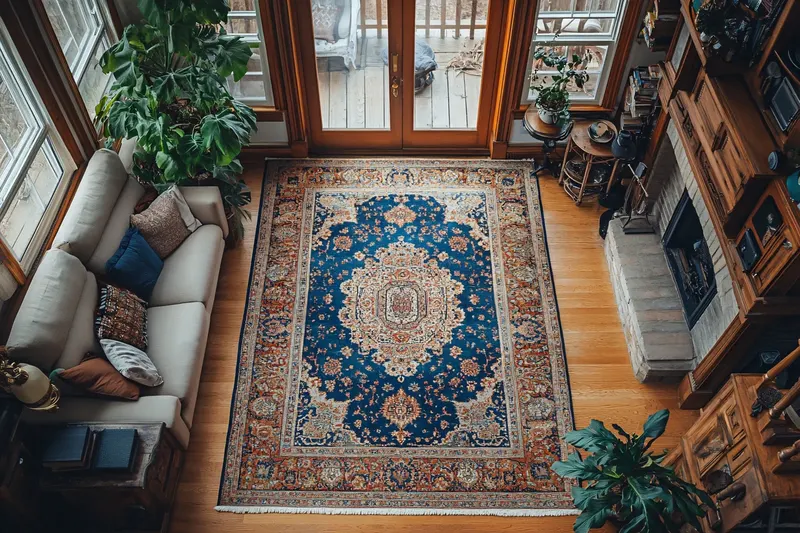
Rugs that belong at a rug plant
Silk and viscose come first on this list. Both fibers mark easily when they get wet, lose their sheen if they are rubbed, and can change color where a spill dried. They need a specialist's hands, a controlled wash and careful drying, and no honest technician will promise to clean one on a living room floor.
Antiques and hand-knotted heirlooms are next, not because the wool is weak but because the dyes may be. Some vegetable dyes and some bright reds and blues can run the moment they are wetted, and a run cannot be undone. When the cloth test shows any color moving, the rug goes to a plant where the dyes can be set before the wash.
Heavy pet contamination is the third reason. Urine does not stay on top of a rug; it passes through the pile, soaks the foundation and sits against the floor or the rug pad underneath. One accident, treated promptly, is an in-home job. A rug that has been soaked again and again needs to be flushed through, and only a full wash can do that.
Add to the list any rug with a rotting foundation, moth damage, fringe that has gone yellow or gray, and any rug you would be heartbroken to lose. For those we would sooner point you to a plant than take a chance on your floor.
What we do when the answer is a plant
We tell you. The technician looks at the rug during the walk-through, does the cloth test, and says plainly which clean the rug needs. If it is a plant job, you are free to use any rug plant you trust, and we clean the carpet and the other rugs on the same visit as planned. The written price covers only the rugs we clean, and nothing is done to a rug until you have that price in hand.
How often a rug needs a professional clean
Our rule of thumb for a rug is the same as for the carpet around it. A rug in a living room, a hallway or under the dining table does well with a professional clean once a year. With kids or pets in the house, every six months keeps it ahead of the soil, and a rug a dog sleeps on may want attention every three or four months. A bedroom rug that sees little traffic can wait longer.
Between cleans, vacuuming does most of the work. Grit sinks to the bottom of the pile and grinds the fibers with every step, and a slow pass with the vacuum once or twice a week pulls it out before it does damage. Switch the beater bar off for wool, shag and anything hand-knotted; suction alone is enough, and a spinning brush pulls fibers loose.
Spin the rug around twice a year as well, so the end that takes the foot traffic and the sunlight trades places with the end under the sofa. Wear and fading then spread across the whole rug, and no single corner gets tired first.
Fringe: handle it gently
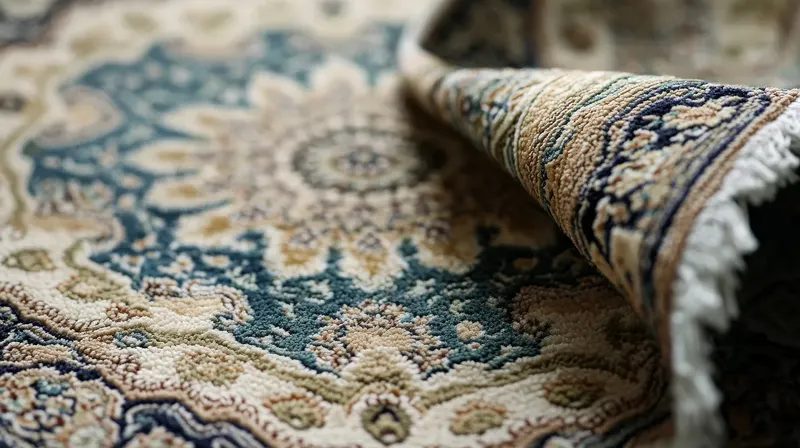
The fringe on a hand-knotted rug is part of its structure, not decoration. Those threads run the full length of the rug underneath the knots, which is why a tug on the fringe can loosen a row of pile. On a machine-made rug the fringe is usually a strip sewn to the ends, which is sturdier but still easy to shred with a vacuum.
A few habits keep fringe out of trouble. Stop the vacuum at the edge of the pile and lift the fringe aside by hand, or use the hose with no brush on it. Never cut a loose fringe thread flush; tuck it under and mention it at the next clean. And when a fringe has gone dingy, say so when you book, because fringe that needs whitening is usually a plant job and we would rather tell you up front.
During an in-home clean the technician works the fringe by hand, combs it straight and lets it dry flat. A clean straightens and freshens the fringe; it does not bleach it.
Rug pads: the part under the rug
A rug pad does four jobs. It keeps the rug from creeping across a hard floor, it keeps the corners flat so nobody trips, it cushions the pile so the fibers wear more slowly, and it lets a little air move under the rug. Almost every rug deserves one, cut to stop an inch or two short of the rug's edges, which lets those edges taper down to the floor.
Rugs on top of carpet need a rug pad made for that, usually a firmer one with a face that holds to the carpet pile. The thin waffle kind sold for hard floors slides on carpet and does very little.
A rug pad also takes the hit when a pet has an accident. Urine that goes through the rug ends up in the rug pad, and a pad holds odor stubbornly. Rug pads are inexpensive, so swap a soaked one for a new one after the rug has been treated, and if the rug sits on carpet, ask the technician to treat the carpet underneath as well.
What rug cleaning costs, without the numbers
In-home rug cleaning is priced per square foot, with the rate set by what the rug is made of: a synthetic rug costs less per foot than wool, and wool less than a delicate natural fiber. Because the rug is cleaned during the carpet visit, there is no second trip and no separate appointment to arrange. The pricing guide shows how our prices are built.
A plant wash is also priced by the square foot, at a higher rate, because the rug is handled several times over several days by people who do nothing else. For a silk rug or an heirloom, that is money well spent. For a synthetic rug from a big-box store it often costs more than the rug did, which is a fair reason to clean it at home or let it go.
Either way, you will know the number before anything starts. The technician walks the rooms with you, writes the price up, and that written price is what you pay.
What the visit looks like
The technician arrives for the carpet and the rugs together, walks through with you, and looks at each rug: the fiber, the back, the dyes, and any spots you point out. Small items on the rug get lifted off, and furniture light enough to move is moved and cleaned under. The rug is cleaned in place, the fringe is combed, and the rug dries where it lies. At the end you walk through again and look over every rug together.
Our 100% satisfaction guarantee covers the rug the same as the carpet: love the clean or it's free, and we come back at no charge for anything you point out. Our rug cleaning page describes the service in full, and you can book online for any of our markets or call 205-438-9096.
Area rug questions
Can a wool rug be cleaned on my floor, or does wool always have to go out?
Many wool rugs clean well in place. Wool is tough, hides soil and gives it up readily to a low-moisture clean. The technician presses a damp white cloth on a hidden corner first; if no color comes off and the backing is sound, the rug is cleaned where it lies and is dry in about an hour, sometimes a little more for a thick pile. If color moves on the cloth, it is a plant job, and we will say so.
Which rugs should never be cleaned at home?
Silk and viscose, because water marks them and rubbing dulls them. Antiques and hand-knotted rugs whose dyes move in a cloth test. Rugs a pet has soaked more than once, because the urine has gone through to the foundation and only a full wash flushes it out. For any of those, a rug plant with a wash floor and a drying room is the safe choice.
Will cleaning make my rug's fringe white again?
An in-home clean straightens and freshens the fringe, and it comes out cleaner, but it is not a whitening process. Fringe that has gone yellow or gray from years of foot traffic usually needs a plant treatment. Tell us when you book what the fringe looks like, and we will be honest about what a floor clean can and cannot do for it.
Do I need a rug pad under a rug that sits on carpet?
Yes, and it needs to be the kind made for carpet, with a firm body and a face that grips the pile. The thin rubbery pads sold for hard floors slide around on carpet. The right rug pad keeps the rug from creeping, keeps the corners flat, and stops the rug from wearing its own pattern into the carpet beneath it.
How long does an in-home rug clean take to dry?
Most rugs are dry in about an hour, the same as the carpet around them, because our low-moisture clean puts only a measured amount of solution into the rug and the cleaning pads carry most of it back out with the soil. A thick wool pile holds a little more and may take longer. The technician will tell you when furniture can go back on it.
Satisfaction guaranteed on every visit.
Low-moisture deep clean, dry in about an hour · Love the clean or it's free.