
Pet Stains and Odors: What Works, What Does Not, and Why the Smell Comes Back
A pet accident on carpet is two problems wearing one coat: the mark you can see and the smell you cannot find. Most of the advice online fixes neither for long. This is what we tell our own customers, from the first ten minutes to the day the technician arrives, and the honest truth about sprays, padding and the rare spot that cannot be saved.
- Blot fast, blot dry, keep the water light, and never use heat or scrubbing on a fresh accident.
- Deodorizers cover a smell for a while. Our protein and enzyme treatment breaks the urine down at its source, so there is nothing left to smell.
- Urine goes through the fibers into the backing and the padding, and that is where most of the odor lives.
- Old spots come back when moisture reaches that padding. Treating at depth stops it.
- Cat urine is stronger and often lands low on walls and corners; dog accidents are larger and tend to repeat in one place.
- Padding rarely has to be replaced, and you will hear about it at the walk-through, never after.
- Our 100% pet odor removal guarantee covers every spot on the treatment list. If one ever smells again, the re-treatment costs you nothing.
The first ten minutes
The clock starts the moment the accident happens. Urine moves down through the fibers quickly, and the longer it sits, the more of it reaches the backing and the padding, where towels cannot follow. What you do right away decides how big the job becomes.
Get the solids up
A paper towel does the job, or a plastic bag turned over your hand; lift toward the center so nothing is pushed deeper into the pile.
Blot, with weight
Press a thick, clean white towel into the spot with the heel of your hand and hold it there. Switch to a dry section each time it soaks through, and keep going until almost nothing transfers.
A light rinse
Add a few drops of cool tap water, no more than a splash, and blot again. Once or twice does it. Pouring water on sends the urine wider and deeper.
Mark it and leave it
Set a sticky note or a coin beside the spot so you can find it later, and let it air-dry on its own.
Vomit and other messes follow the same order: solids, blot, light rinse, blot. Speed matters with those too, because what is in them can leave a mark as well as a smell.
Then there is the list of things not to do. No heat from a hair dryer or an iron, which can cook the stain and the smell into the fiber for good. No scrubbing, which frays the pile and spreads the mark. No cleaners that smell of ammonia, which smells like urine to a pet and invites a repeat. No bleach or oxygen boosters on colored carpet, since they can take the dye with the stain. And no rental machine over an old accident, for reasons the next sections explain.
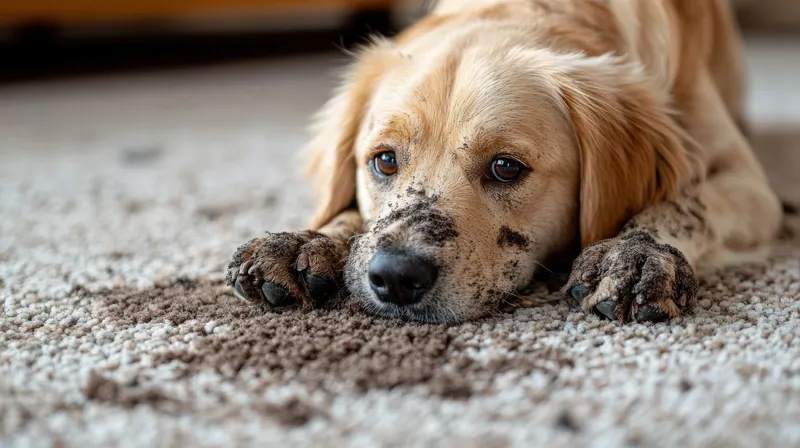
Enzyme treatment vs deodorizer
Almost everything sold for pet smells falls into one of two groups, and the difference matters more than the brand. A deodorizer works on your nose. It adds a scent strong enough to cover the odor, or wraps the smell for a while so you stop noticing it. The source is untouched, and when the fragrance fades, which it does within days, the smell is right back where it was.
An enzyme treatment works on the urine itself. Enzymes break the compounds that cause the odor into pieces that do not smell, and once that has happened there is nothing left to cover. Our pet treatment is a protein and enzyme formula applied by the technician, given time to work, and followed by the low-moisture clean that lifts the residue out of the carpet.
Two things separate a professional treatment from the enzyme spray at the pet store. The first is reach: the technician applies it at the depth the urine actually went, not just the surface. The second is coverage, since urine spreads under the carpet far wider than the mark on top, and the treatment has to follow it.
Where the urine goes: fibers, backing, padding
Picture the carpet in layers. The fibers on top dry fastest and hold the least. Beneath them is the backing that holds the fibers together, and beneath that is the padding, a thick sponge that sits on the floor. A fresh accident passes through the first two layers in minutes and settles in the third.
A surface cleaning, including a hard scrub with a store spray, deals with the fibers. It can make the top of the carpet smell fine for a day or two while the padding underneath still holds the problem. That is why the smell drifts back, and why your dog or cat, with a nose far sharper than yours, finds the spot again long before you do.
Treating the padding is the whole job. The enzyme treatment has to reach it, dwell there and break down what it finds, and the technician plans each spot with that depth in mind.
Why old spots come back
A spot that seemed gone for months can reappear after a wet cleaning, and the mechanism is simple. Dried urine in the padding is reactivated by moisture, and as the soaked carpet dries from the top down, that moisture climbs the fibers and carries the old urine up with it. The carpet looks and smells worse than before the cleaning. People blame the cleaner, and in a sense they are right.
Our approach avoids both halves of that problem. The treatment goes down to the padding and breaks the urine down where it sits, and the low-moisture clean that follows never soaks the carpet, so there is no rising tide to bring anything back. If a treated spot does ever smell again, the guarantee below takes over.
Cats and dogs are different problems
Cat urine is more concentrated, which makes it smell stronger and linger longer, and cats tend to go in places people do not think to look: low on a wall, in a corner, against the skirt of a sofa, around the litter box. A cat that is spraying, not squatting, leaves marks at ankle height, so the technician checks the walls and furniture edges as well as the floor.
Dogs leave more volume in one spot and tend to repeat it. A puppy in training, an older dog whose bladder is not what it was, or a dog left alone a little too long usually chooses the same patch of carpet each time, and that patch gets soaked again and again. Those repeat spots are where padding takes the most abuse, and where the treatment needs the most time to work.
Both get the same honest treatment plan: find every spot, treat it at depth, clean the room, and come back if the smell returns.
Stains and smells are separate questions
The odor is the part we can promise. The color is the part that depends on history. A spot caught early and treated usually cleans up completely. A spot that has been soaked many times over a long period can alter the dye in the fiber, and once the dye has changed, no cleaning on earth restores it.
You will know which you have before you agree to anything. The technician looks at every spot with you during the walk-through, tells you plainly what the treatment will and will not do for the color, and writes the price before any work starts. The odor guarantee applies either way.
When the padding has to be replaced
It happens, though far less often than people fear. When the same spot has been soaked for years, the padding can be saturated through to the floor beneath it, and at that point even the best treatment is working against a reservoir that keeps refilling the smell. The honest answer in that case is new padding under that section, and sometimes attention to the floor under it.
We would rather tell you that at the start than sell you a treatment that cannot win. It is a small share of the spots we see, and the technician tells you during the walk-through if your carpet is one of them. The great majority of pet spots, including old ones, respond to treatment at depth.
Our 100% pet odor removal guarantee
Every treated spot is covered. If pet odor returns in an area the technician treated, call 205-438-9096 and we schedule a re-treatment at no charge. The promise is the same in all five of our markets, and it is the reason we use a treatment that reaches the padding instead of one that perfumes the surface.
The guarantee is tied to the spots on the technician's list. A new accident in a new place next month is a new spot, and we are happy to handle it on its own visit. All of it sits inside the promise behind every job we do: satisfaction guaranteed, love the clean or it's free.
Finding every spot before we arrive
The spots you already know about are seldom the whole list. Get low and work around the room with your nose, paying attention to baseboards, corners, the floor behind the sofa, closet doorways and the edges of rugs. In a dim room, a flashlight held almost flat against the carpet can show a faint change in the pile where a spot dried.
Mark each one. Once the technician is there, go through the rooms side by side and point out every one, including the ones you only suspect. A spot that gets pointed out gets treated. A spot that does not is the one you will notice next month.
Helping your pet stop
A pet goes back to wherever smells like a bathroom to it, so removing the odor completely is half of the fix. The rest is habit. Extra trips outside for a dog, and a cleaner litter box in a quiet spot for a cat, change the habit faster than any spray.
For a couple of weeks after treatment, park a chair or a basket on the old spot, or keep that door shut. It breaks the pattern while the carpet settles into smelling like nothing at all.
Rugs and upholstery
Accidents on area rugs get the same treatment, and the rug never leaves your floor; it is cleaned in place during the visit. Urine often goes straight through a rug to the floor beneath, so after a fresh accident lift the corner and blot the underside too. Our rug cleaning page covers wool, synthetic and cotton rugs.
A sofa the dog sleeps on collects the same oils and odors as carpet. The technician reads the fabric's cleaning code on the care tag before choosing a method, and the upholstery cleaning page explains what that means for your piece.
When to call us
Call when a smell is still there after the spot has dried, when your pet keeps returning to one place, or when you are moving into a home where someone else's pets lived. The pet stain and odor removal page describes the treatment in full. Everything we use is non-toxic and safe to have around children and pets; the room is dry in about an hour, and you have the price in writing before anything begins.
When you are ready, book online and the office will confirm a time with you. Mention the pets when you book so the treatment is planned into the visit, and read our guide on how often to clean for the schedule we suggest for homes with animals.
Pet stain and odor questions
Why does the spot smell worse after I clean it with water?
Water wakes it up. Dried urine sitting in the padding is fairly quiet until moisture reaches it, and a generous rinse or a rental machine does exactly that, then spreads it sideways as well. The smell you notice afterward was already there; the water just carried it back to the surface. Blot a fresh accident with very little water, and leave an old one dry until it can be treated at depth.
Will the enzyme treatment remove the yellow mark, or only the smell?
The smell, yes, and that is what the guarantee covers. The color depends on how long the urine sat and what the fiber is made of. Many marks fade or disappear once the source is broken down and the area is cleaned, while a spot that has been soaked repeatedly can change the dye in the fiber itself, and no cleaning restores color that is gone. The technician tells you which kind you have at the walk-through.
How do you find pet spots I cannot see?
We start with your nose and your notes, then the technician checks the usual places: along baseboards, in corners, under the edges of rugs, behind furniture and in closet doorways. A spot often feels slightly stiff or looks faintly darker than the carpet around it. Everything found gets treated, and the treatment is applied wider than the visible mark, because urine spreads under the surface as it soaks in.
Does the pet odor guarantee cover new accidents after the visit?
It covers every spot we treated. If one of those smells again, call us and the technician re-treats it at no charge, as many times as it takes. A fresh accident in a new place is a new spot, so it needs its own treatment, and we are glad to come back for it. Most families pair the pet treatment with their regular carpet cleaning so the whole house gets reset at once.
Why does my cat keep going back to the same corner?
Because to the cat it still smells like a litter box. A cat's nose finds traces that a deodorizer has only covered, and the spot keeps calling the cat back. Taking the odor out completely is the first step, which is what the enzyme treatment does. The second is routine: a clean box in a quiet place, one box per cat if you have several, and a chair or basket set over the old corner for a couple of weeks.
Is the treatment safe in a nursery or around a new puppy?
Yes. The enzyme treatment and the cleaning solution we use are both non-toxic and safe for children and pets, and the room is dry in about an hour. Keep the puppy off the treated carpet until it is dry, mostly so the treatment can finish its work undisturbed, and then the floor is theirs again. Nothing sticky or scented is left behind in the fibers.
Satisfaction guaranteed on every visit.
Low-moisture deep clean, dry in about an hour · Love the clean or it's free.