
Commercial Carpet Cleaning: How Often a Workplace Needs It, and Why It Differs From a Home
Carpet in a workplace lives a harder life than carpet in a home. Hundreds of pairs of shoes cross the same strip of it every day, nobody takes them off at the door, and the building cannot close for a day while the floor dries. This guide is for the person who looks after that floor: how often it needs cleaning, why the lanes go first, and how an after-hours low-moisture clean fits into the week without getting in anyone's way.
- Workplace carpet soils in lanes, from the door to the desks, and those lanes need attention sooner than the rest of the floor.
- Offices do well with lanes cleaned every three to six months and the full floor once or twice a year; daycares and medical waiting rooms need more.
- We clean after hours, and the carpet is dry in about an hour, so the first person in the next morning walks in on a dry floor.
- Nothing sticky is left behind, so the lanes stay clean about three times longer than after a soapy wet clean.
- A recurring program sets the schedule and the price in writing in advance, so nobody has to notice the floor before it gets cleaned.
Why a workplace carpet is a different job
In a home the dirt spreads around. In a workplace it concentrates. Everyone comes through the same door, walks the same corridor, turns at the same corner by the printer and stops at the same coffee station. The carpet in those strips carries almost all of the soil in the building, while the carpet under the desks stays nearly new.
The carpet itself is different too. Much of it is low, dense pile in squares or glued straight to the floor, built to take abuse and to hide soil. That hiding is a mixed blessing: by the time a commercial floor looks dirty, it has been dirty for a long time, and the grit in it has been grinding at the fibers the whole while.
And the timing is different. A home can empty a room for an afternoon. An office, a clinic or a classroom has people in it all day and a schedule that does not bend, so the clean has to happen when the building is quiet and be finished, dry and odor-free before the doors open again.
Traffic lanes: where the soil goes
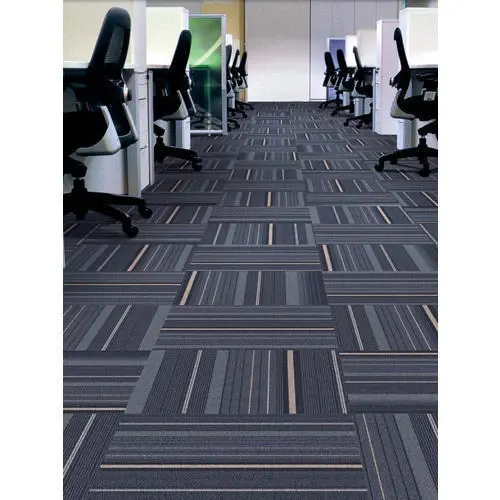
Look at the floor from the entrance and you can see the map. A darker path leads from the door to the reception desk, down the main corridor, into the break room and around the copier. Those are the traffic lanes, and they hold the grit and oily soil that shoes bring in and press down, step after step.
Lanes are where the cleaning schedule should start. We pre-treat them before the main clean so the solution has time to loosen what has been walked into the fibers, then clean the whole floor so the lane matches the carpet beside it. A lane cleaned while it is only dull comes back to match. A lane left until the fibers are crushed and frayed will look cleaner afterward but never quite even again, because the damage is in the carpet, not on it.
Walk-off mats inside every entrance cut what reaches the lanes in the first place. The longer the mat, the more it catches. Keep them vacuumed, or the mat becomes the first lane.
How often, by the kind of space
These are our rules of thumb. Every building is different, and a recurring program is built around how yours is used.
Offices. Lanes and the reception area every three to six months, the whole floor once or twice a year. A small office with a dozen people sits at the longer end; a busy front lobby sits at the shorter one.
Daycares and preschools. The carpet is the play surface, so it gets the spills, the snacks and the accidents, and children spend the day at floor level. Every three months is the right rhythm for the rooms children use, with a non-toxic solution that leaves nothing behind for small hands to pick up.
Churches. The sanctuary aisles, the foyer and the fellowship hall take heavy use on specific days and sit quiet in between. Twice a year suits most, timed ahead of the busiest weeks, and a nursery or a weekday preschool follows the daycare schedule.
Medical and dental suites. Waiting rooms carry the most traffic and the most scrutiny. Every three months for the waiting area and corridors, with the exam side on the same visit or every six months, keeps the place looking the way patients expect a clinic to look.
Retail, lobbies and apartment turns. A store entrance is one long lane and needs the lane schedule. A move-out clean is a one-time job, done before the next tenant sees the unit, and the carpet is dry before the showing.
Evenings and weekends, with the doors open again in about an hour
Most commercial work happens in the evening or on a weekend. The crew arrives after the last person leaves, moves the light pieces, cleans, puts the pieces back and locks up. Because the process uses a measured amount of solution and the cleaning pads carry the soil out with it, the carpet is dry in about an hour, and the first person in the next morning walks in on a dry floor with no smell of chemicals.
That dry time matters more in a building than in a house. A floor that stays wet overnight in a closed building is a floor nobody can use the next morning, and it is where the musty smell that follows some cleanings comes from. The low-moisture approach leaves nothing to dry out slowly.
It also leaves nothing sticky behind. Soapy wet cleaning leaves a film in the fibers that catches the next week's grit, which is why some floors look dirty again in a month. With nothing left behind, the lanes stay clean about three times longer.
What it does for the air in the building
Carpet is a filter. It catches the dust, the dander on people's clothes and whatever comes in on shoes, and it holds all of that down in the pile where a vacuum reaches only part of it. A filter works until it is full, and a full one gives back what it caught every time someone walks across it.
A professional clean empties the filter. The solution loosens what is packed at the bottom of the pile, and the pads carry it out of the building, dust and dander included. In a daycare, a waiting room or an open-plan office with a lot of people in a small space, that is the most practical reason to keep the carpet on a schedule.
We clean with an eco-friendly, non-toxic solution, which is the standard a daycare or a clinic should hold any cleaner to. For buildings where the people inside ask about allergens, our allergy relief treatment can be added to the clean.
Recurring programs
A recurring program is a schedule and a price agreed once, instead of a phone call every time the lanes look bad. We walk the building with you, mark the lanes and the rooms that matter most, and set a rhythm: lanes on some visits, the whole floor on others, spot visits when a spill or an accident needs attention in between.
The crew gets to know the building: which doors to use, which rooms are off limits and which corner by the kitchenette always goes first. The price is written down before the first visit, and each visit is cleaned to the same standard and the same guarantee. Programs flex around your calendar, so a church is cleaned before its busiest weekend and a school during its break.
What a facilities manager should ask
You are answerable to the people who use the building, so ask the questions a homeowner might skip. These are the ones we would ask, and our answers.
- Who does the work? Our own trained, insured employees, never subcontractors. Ask to see proof of insurance before anyone starts; we carry it.
- What is in the solution, and is it safe for the people here? Ours is eco-friendly and non-toxic, and nothing sticky stays in the carpet afterward.
- When can the room be used again? In about an hour. An overnight dry time means a wet method.
- What gets moved? Light pieces are moved and cleaned under; desks, systems furniture and filing cabinets are cleaned around. Say in advance what cannot be touched.
- Is the price written before the work starts? Yes, after a walk-through, and the written price is the invoice.
- What happens if a spot comes back? It gets another visit at no charge. The whole job carries our 100% satisfaction guarantee: love the clean or it's free.
Getting a written quote
Commercial quotes start with a walk-through, because the right number depends on the square footage, the lanes, the furniture and the hours we can work. We come out, look, listen to what bothers you about the floor and hand you a written price. Nothing starts until you have it.
Our commercial carpet cleaning page covers the service in more detail. To set up a walk-through for an office, a daycare, a church or a clinic in any of our markets, use the contact page or call 205-438-9096.
Commercial carpet questions
How often does office carpet need a professional clean?
Our rule of thumb is the traffic lanes and the reception area every three to six months and the whole floor once or twice a year. A small office with light foot traffic sits at the longer end. A lobby that sees the public all day sits at the shorter end, and a recurring program is usually built around that lobby.
Can a daycare be cleaned without closing for a day?
Yes. We clean in the evening or over a weekend, after the last child goes home, and the carpet is dry in about an hour. We use an eco-friendly, non-toxic solution, and the fibers hold no sticky residue for small hands to find the next morning. Every three months is the rhythm we suggest for the rooms children use.
Why do the walkways in our building look worse than the carpet under the desks?
Because almost all of the building's foot traffic crosses those few strips. Shoes bring grit and oily soil in and press it down with every step, so the lanes fill with soil long before the rest of the floor does. Walk-off mats at every door slow it down, and pre-treating the lanes before the main clean brings them back to match the carpet beside them.
What should I ask before setting up a recurring cleaning program?
Ask who will do the work and whether they are employees, what the solution contains, how soon the space can reopen, what gets moved and what is worked around, whether the price is in writing before the first visit, and what happens when a spot returns. Our answers are in the guide above, and we are glad to put them in writing for your file.
Will the building smell of chemicals the next morning?
No. Our solution is non-toxic and eco-friendly, the carpet is dry in about an hour, and no wet floor sits overnight in a closed building to turn musty. The first person in should notice a cleaner floor and nothing else.
Do we need to move the desks before the crew arrives?
No. Light pieces such as chairs, small tables and waste bins are moved and cleaned under, and desks, systems furniture and filing cabinets are cleaned around. If a room or a piece of equipment must not be touched, say so during the walk-through and it goes on the written plan.
Satisfaction guaranteed on every visit.
Low-moisture deep clean, dry in about an hour · Love the clean or it's free.